



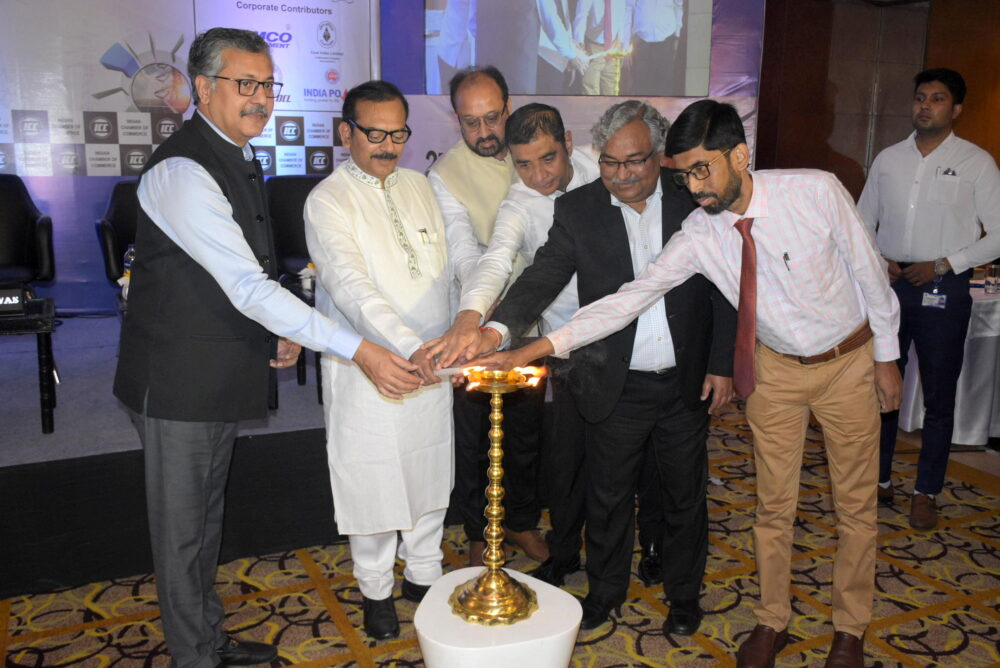
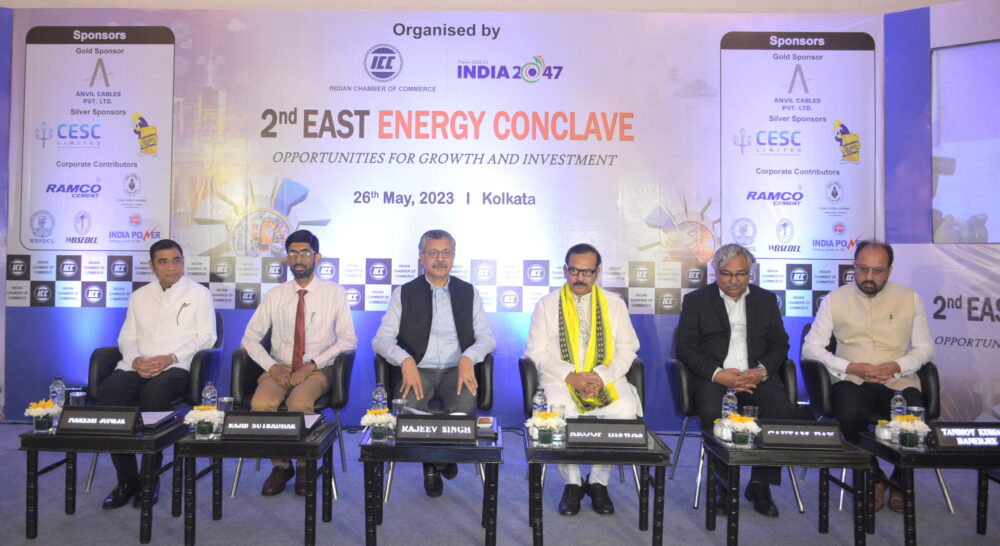
Kolkata :::: The Indian Chamber of Commerce organised the 2nd East Energy Conclave, a premier gathering of industry experts, policymakers, and investors held on Friday, 26th May 2023. This significant event aimed to shed light on the abundant opportunities for growth and investment within the power sector. The conclave also served as a crucial forum for participants to discuss the emerging trends, challenges, and advancements in the power industry. With a focus on the Eastern region of the country, the event is intended to highlight the untapped potential and investment prospects in this rapidly evolving sector. This facilitated meaningful dialogues to explore avenues for sustainable growth and explore investment opportunities that can further propel the power sector’s development. Renowned personalities from various sectors of the power industry graced the event as esteemed speakers such as Shri Aroop Biswas, Minister-in-Charge, Power, Youth Services and Sports and Housing, Govt. of West Bengal, Mr. Anil Razdan, Former Secretary, Power GOI, Mr. Gautam Ray, President (HR-Power Group), RPSG Group of Companies, Mr. Tanmoy Kumar Banerjee, CMD, Bhavika Commercial Pvt Ltd, Mr. Naresh Juneja, Director, Fenasia Ltd & Honorary CG, Cuba, Mr. Rajib Sutradhar, ED, Eastern Region Load Despatch Centre, and Dr. Rajeev Singh, Director General, Indian Chamber of Commerce.
Mr. Anil Razdan, Former Secretary, Power GOI, expressed his anticipation in the virtual welcome address, stating, “The East Energy Conclave serves as a remarkable platform for discussing the immense potential for growth and investment in the power industry. I am honored to be part of this event and share my thoughts on this crucial subject. I am amazed how the Eastern energy sector not only presents opportunities for growth but also attracts investments. The region boasts an impressive 87% share of hydrocarbon fuels, showcasing its immense potential. Furthermore, the transition towards renewable energy sources is the way forward. Shifting from fossil fuels to non-fossil alternatives will benefit us all. Additionally, the Eastern region, including Assam, Orissa, and Kolkata, holds great potential for growth in sectors such as automobile manufacturing. Strengthening ties with Bangladesh will be beneficial, especially in the areas of hydroelectric power generation and establishing hydroponic houses in the North East. Furthermore, Kolkata’s strategic position as the heart of the region’s industry and commerce, combined with its favourable climate, makes it an ideal hub for energy development. I must also mention that the Eastern region boasts the best pump storage facility in Purulia, which serves as a reliable source of hydroelectric power. It is an exciting time for the energy sector in this region, and I am eager to engage in fruitful discussions and explore ways to harness its full potential.”
As a leading figure in Bhavika Commercial Pvt. Ltd., Mr. Tanmoy Kumar Banerjee brought a unique perspective to the conclave. He conveyed his enthusiasm, stating, “In the face of economic turmoil and geopolitical uncertainties, we witness remarkable growth in the Indian economy. Termed one of the fastest-growing economies globally, India’s GDP is bolstered by the contributions of Jharkhand, Bihar, Orissa, and West Bengal. In particular, West Bengal stands out with its significant 23% contribution, surpassing its population share. Initiatives aimed at promoting business and fostering a favourable investment climate play a pivotal role in the region’s development. West Bengal is a state that has a great deal of potential to accelerate the expansion of the nation because of the East’s distinctive personality and strategic location. We must harness the power of both quantitative and qualitative data to further strengthen the state’s commerce. It is worth noting that West Bengal, with a land area equal to the size of Serbia, possesses abundant human capital and natural resources. The state has made significant strides in the power sector, including hydroelectric, solar, wind, and tidal energy. The contribution of small and medium enterprises (SMEs) to the growth and economy of the region is noteworthy. Industrialization plays a crucial role, and initiatives like ‘Make in India’ are instrumental in fostering this transformation. Addressing climate change is a pressing issue, and the transition to renewable energy sources is of paramount importance. We must unlock new avenues and facilitate a seamless transition towards sustainable practices. In this context, business matters, as it holds the key to our collective betterment and the long-term prosperity of the region.”
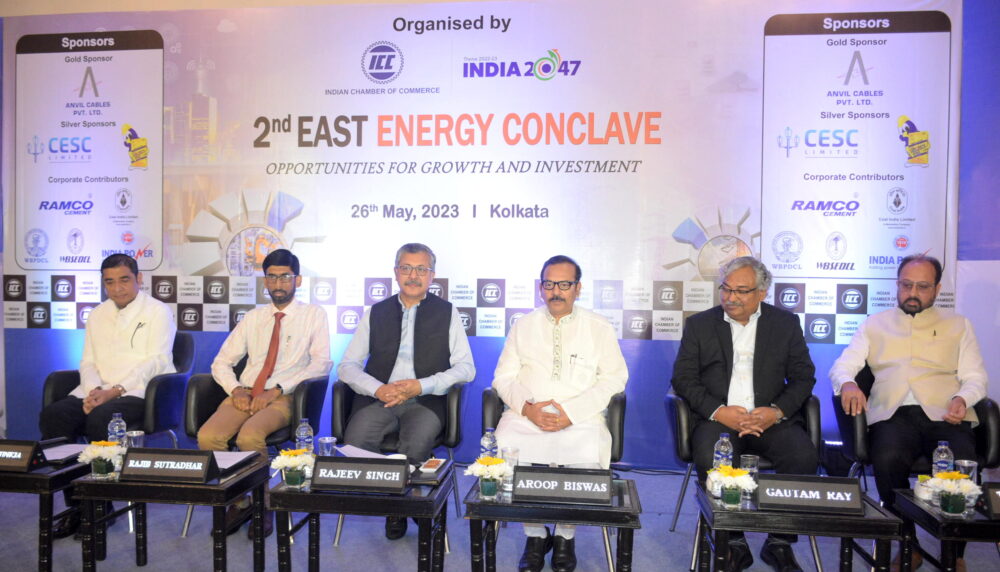
As a prominent representative of the Eastern Region Load Despatch Centre, Mr. Rajib Sutradhar provided valuable insights into regional energy management. He stated, “As the Executive Director of the Eastern Region Load Despatch Centre, I am closely observing the emerging issues in the power sector. One notable trend is the increasing amount of solar energy generation and the challenges associated with its integration into the grid. We need to address issues such as pattern recognition, ramping, and variability in solar generation to ensure a stable and reliable energy supply. Two key solutions that have gained prominence are battery storage and pump storage. Many ongoing projects focus on enhancing battery storage capacity, enabling better management of intermittent renewable energy sources. Additionally, pump storage facilities, like the one in Purulia, have proven to be effective in balancing the grid during peak demand periods. While there is a significant number of pump storage projects, there is a need to augment solar power generation in the region. Collaboration with neighbouring countries such as Nepal, Bhutan, and Bangladesh holds great promise as they are well-connected and possess abundant sources of power generation. These partnerships allow us to explore opportunities for power exchange, taking advantage of each country’s strengths and addressing the energy demands of the entire region. The Eastern region, with its strategic location and diverse energy resources, has the potential to become a hub for power generation. By leveraging these resources and fostering cross-border collaborations, we can achieve a more robust and sustainable energy landscape in the Eastern region.”
As the esteemed Minister-in-Charge, Power, Youth Services and Sports and Housing, Govt. of West Bengal, Shri Aroop Biswas shed light on the government’s initiatives and policies aimed at driving the power sector’s growth. He expressed his commitment, stating, “It is with immense pride and satisfaction that I reflect on the remarkable progress we have achieved in harnessing solar power sources under the leadership of Mamata Banerjee. In the past, load shedding was a common occurrence, but the visionary efforts of our Chief Minister eradicated this issue from the roots. West Bengal has emerged as a frontrunner in the power sector, with notable contributions from NTPC, DVC, Reliance Power, and Adani Power. We have successfully reduced our reliance on imported coal, ensuring energy self-sufficiency for the state. Notably, the installation of 33 KV power plants since 2011 has been a significant milestone, with a staggering capacity of 85 lakh households receiving uninterrupted power supply. Our commitment to renewable energy is evident with the introduction of solar power plants such as Tungadhowa Solar Park and ACDCL, contributing to the clean and sustainable energy transition. The transformational initiatives implemented have witnessed the reduction of carbon emissions, with Durgapur Power Plant’s law seduction resulting in a commendable decrease from 1706 megawatts to zero. Looking ahead, we are determined to continue our efforts towards further power plant introductions, with a target of installing 4,000 megawatts of additional capacity. The East and North East regions of India hold immense potential and play a vital role in providing access to power for all. Inspired by the words of Rabindranath Tagore, ‘Amar ghore esho’, we invite and encourage all stakeholders to join hands in this transformative journey, fostering progress, prosperity, and a brighter future for all.”
Dr. Rajeev Singh, the Director General of the Indian Chamber of Commerce (ICC), emphasised the importance of the conclave, stating, “The ever-increasing energy demand is a reality we cannot ignore. As the pie continues to grow, we must recognise the need for greener and more sustainable options to meet this demand. The ongoing conflict in Ukraine has disrupted power plant operations, further emphasising the urgency to explore alternative and more environmentally friendly solutions. Sustainability and green growth must be at the forefront of our agenda. It is essential to embrace innovative technologies and policies that promote a cleaner and more sustainable energy ecosystem. We must prioritise the development and implementation of strategies that balance economic growth with environmental stewardship. In conclusion, I would like to extend my heartfelt gratitude to all the esteemed speakers who have shared their valuable insights and expertise. The credit goes to the Chief Minister and Minister Aroop Biswas for their visionary leadership and commitment to driving positive change in the power sector. Aroop Biswas’s emphasis on presenting factual numbers rather than mere rhetoric demonstrates his dedication to practical solutions. I am hopeful that this conclave is rewarding enough for the set of business minds present here and this will create an optimistic effect on the industry.”
PHOTOGRAPHY RAJIB MUKHERJEE