




Bengal Editor :: MitraClip is a revolutionary device that was introduced in the country just three years ago and provides a non-surgical alternative to treat patients with mitral valve leaks (mitral regurgitation), which can lead to cardiac failure. The non-surgical method avoids open-heart surgery and instead approaches the heart through a catheter inserted through a vein in the thigh. The MitraClip is delivered to the heart using the catheter under real time 3D Echocardiographic & fluoroscopic guidance.
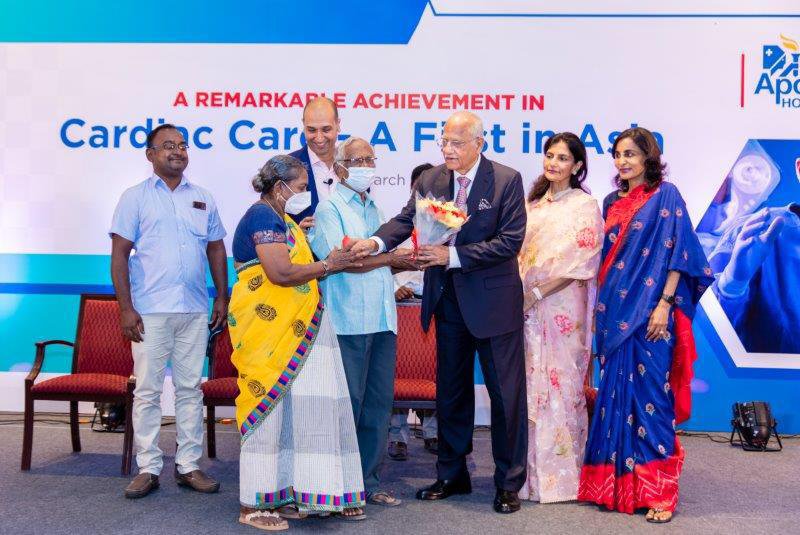
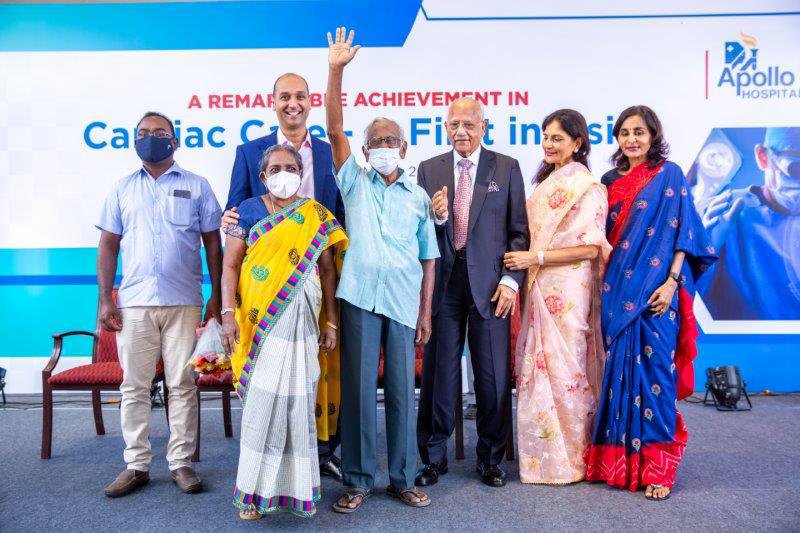
Looking on that The Apollo Hospitals group, Asia’s largest and most trusted healthcare group, notched up yet another record milestone with the successful completion of four back-to-back MitraClip procedures in one day. The MitraClip implants were carried out on four patients suffering from severe heart failure on the same day, surpassing Japan where MitraClip procedures were performed on three patients in a day. The four back-to-back MitraClip procedures were performed at Apollo Hospitals, Chennai by Dr Sai Satish, Senior Interventional Cardiologist. The minimally invasive method used in MitraClip therapy allows repair of a leaking mitral valve without open heart surgery, and is a lifesaver for patients at high surgical risk. All four patients, the oldest of whom was 87 years old, went home walking within 3 days and are currently doing well.
Dr Prathap C Reddy, Chairman, Apollo Hospitals Group said, “ We are proud that Apollo Hospitals is among the select few hospitals in India that is accredited to perform the MitraClip procedure for these heart failure patients. I am sure that our physicians and surgeons will not rest on their laurels and will continue to create new milestones using the best of medical technology that is available for them to use for benefit of our patients.”
Apollo Hospitals is also developing the Echo Connect Project that will allow scaling up of this program to detect leaking mitral valves at a nationwide level. Dr. Sai Satish working with Prof. K Chandrashekaran, Sr. Consultant Cardiologist at Apollo Hospitals, Chennai envisages the Echo Connect Project to enable specialists in Chennai to provide an expert opinion on echocardiography conducted across the country, detect a defective mitral valve and refer them to the apex center at Apollo Chennai for this life-saving MitraClip procedure. Apollo Hospitals is at the forefront of making the MitraClip’s technological breakthrough available for patients as it becomes the standard of care for patients with heart failure with moderate to severe or severe primary & secondary mitral regurgitation who are not improving on medical treatment.A recent landmark trial shows that transcatheter mitral valve repair using the MitraClip along with guideline-directed medical therapy (GDMT) was superior to GDMT alone in reducing hospitalization for heart failure (HF) and mortality in symptomatic HF patients with grade 3-4+ Mitral Regurgitation. Improvements were also observed in left ventricule (LV) dimensions and patient symptoms. Significant improvements were noted in quality of life (QoL) measurements starting at 1 month and sustained out to 24 months. MitraClip also demonstrated excellent safety.
Dr. Sai Satish, Senior Interventional Cardiologist, Apollo Hospitals said, “We have been performing MitraClip procedures for about three years now. It was the confidence gained through our extensive experience that enabled us to perform back-to-back MitraClip implants in four very sick patients in just one day.” Dr. Sai Satish has consistently led in performing procedures on the mitral valve with the highest number of MitraClip implants in the country, having performed over 60% of India’s cases ever since its introduction in the country. He added, “Especially for the frail & elderly, there is very little avenue for conventional mitral valve surgery. The MitraClip is the only percutaneous (done through the skin) technology effective in both functional and degenerative mitral regurgitation. The procedure is performed percutaneously in a cath lab and the device is removable and repositionable. These important attributes contribute to the safety of this procedure. For a properly selected patient who is at high surgical risk, MitraClip is actually economical in the long run as repeat hospitalisations are avoided. More important however, is the fact that the patient gets a new lease of life by regaining his or her quality of life and by being able to pursue an active normal lifestyle once again.”